Always to the frontier

Thursday, January 31, 2013

The Forest Will Not Quit

As hard as it is to believe, large areas of the Front Range in Colorado are still ablaze, even under winter low temperatures and heavy snow-pack.

http://www.coloradoconnection.com/news/story.aspx?id=853700#.UQsLdb88CSo

The forests there have been through really rough patches these past few years, with fire being only the end of problems which have started with drought and climate-pushed insects doing quite the number on the spruce-fir forests.  Still, the western montane forests are incredibly resilient and have to deal with "normal" conditions that make life difficult enough.  Extremely low normal winter temperatures, intense solar radiation, and next to nothing for soil in many locations mean that only the best of the best can even establish here, and they do it well, even when it seems to us that they are struggling miniatures:

Rocky Mountain National Park.  The insect ravaged forests are all those gray-brown patches on the opposite slopes.  You can see a few trees even up here near the treeline.
 

Wednesday, January 30, 2013

Wednesday Filler: Life Outside (and Inside) a National Park

Would that the many parks and preserves in North America stand as the crowning parts of their representative habitat rather than islands among development or commercially exploited lands.  Many if not most are islands, and sometimes within themselves as well.  Death Valley National Park, for instance, is often captured in popular memory as a hot, dry, unforgiving bare bones desert, when in fact it features pine forests, waterfalls, and snow capped mountains.  Saguaro National Park brings us images of pristine desert scenes, when in fact it is being encroached upon by Tucson, and a quick step on either side of the park road gate brings one into an entirely different world of cactus or concrete forest.

So it is with Sequoia National Park, where the big trees are hardly the only feature even in the park itself.  Much of the lower elevations of the park are wonderful reaches of the California chaparral world, while other parts are dry open oak forests with yuccas abounding.  While not the big trees that inspire awe and amazement, these environments are worthy of exploration and a reminder that while the purpose of a park is to preserve and allow everyone to enjoy our national treasures, a park also exists to remind us that the world outside its boundaries, while not protected, is every bit as amazing and worthy of more than a second thought.


Tuesday, January 29, 2013

Crown Point, Indiana

Northwestern Indiana is a unique part of the state as much economically and demographically as it is naturally.  As if human culture were trying to stick to natural drainage patterns and ecotones, heavily industrialized Lake and Porter counties contrast with the rest of the agrarian state.  Even the other large cities such as Fort Wayne and Indianapolis do not feature manufacturing and refining as their main events.  Gary, on the other hand, has industry for its lifeblood.

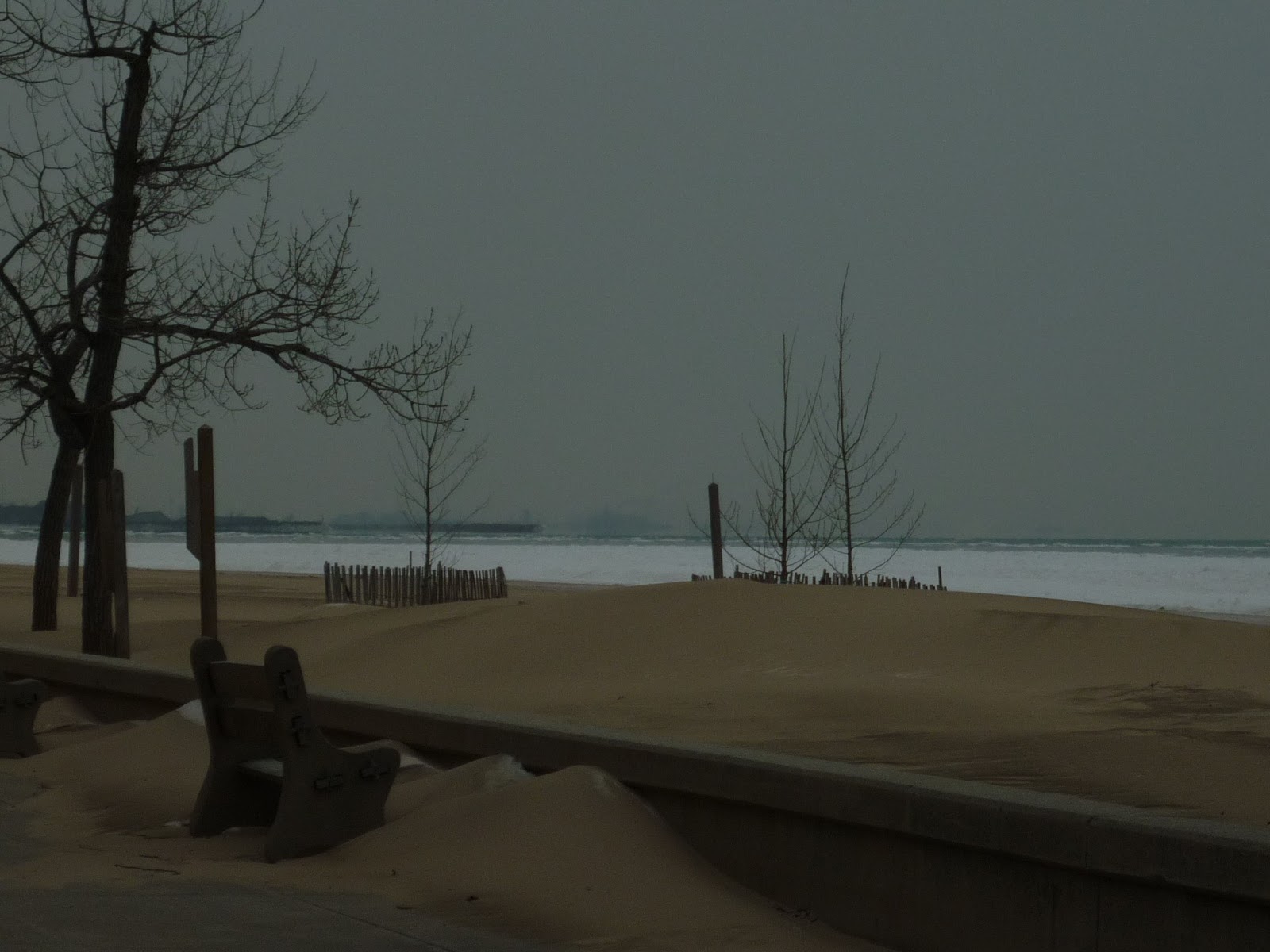
Those blurry bits on the horizon are huge refineries and processing mills that surround the undeveloped shoreline of the Dunes national and state parks.

Head south enough, even within the two south shore counties, and one can find "Indiana proper" slowly emerging, along with a domestic and civic architecture one would expect to find from the true Midwest.   I covered what one could typically find in a Midwestern city center back on a post which featured a few downtown shots of Independence, Missouri .  Picture the downtown from "Back to the Future" (despite it being supposedly set somewhere further west) and you get your classic Midwestern townscape, complete with a central government building, a movie theater, and a bunch of shops set around the main square.  As noted in the earlier post, the civic planning is based on a strong democratic basis of a culture that focuses on interdependent family and small town ties, along with less of a focus on commercialism and more of one on public gatherings.  Still, this is the "cultural ecotone" of northwest Indiana, and the landscape here is just a little bit different.  Case in point: Crown Point.  The pictures, I think, can speak for themselves.


The courthouse.  John Dillinger escaped from here!


Monday, January 28, 2013

Lake Michigan's Southern Shore: North Meets West Meets East

Dramatic stands of Eastern White Pine (Pinus Strobus) and Jack Pine (Pinus Banksiana) grow among Big Bluestem (Andropogon Gerardii), Eastern Prickly Pear (Opuntia Humifusa), as well as a variety of trees common to the eastern forests, notably oaks, hickories, ashes, willows, and more.  In a low, watery basin sits a spahgnum bog topped with boreal species, mere yards away from an open prairie, in turn yards away from an ash swamp, which sits behind cool depressions in sand dunes which give rise to great pines.  This meeting place is the world of the Indiana dunes, a natural point of junction that has also served as a great crossroads for people traveling between various parts of the continent.

Sand, wind, and glaciers are responsible for bringing together a diverse community of plant life that serves to defy definition for the area.  My first sign that I was in an altogether different place was the presence of so many White Pine that just popped up out of nowhere.

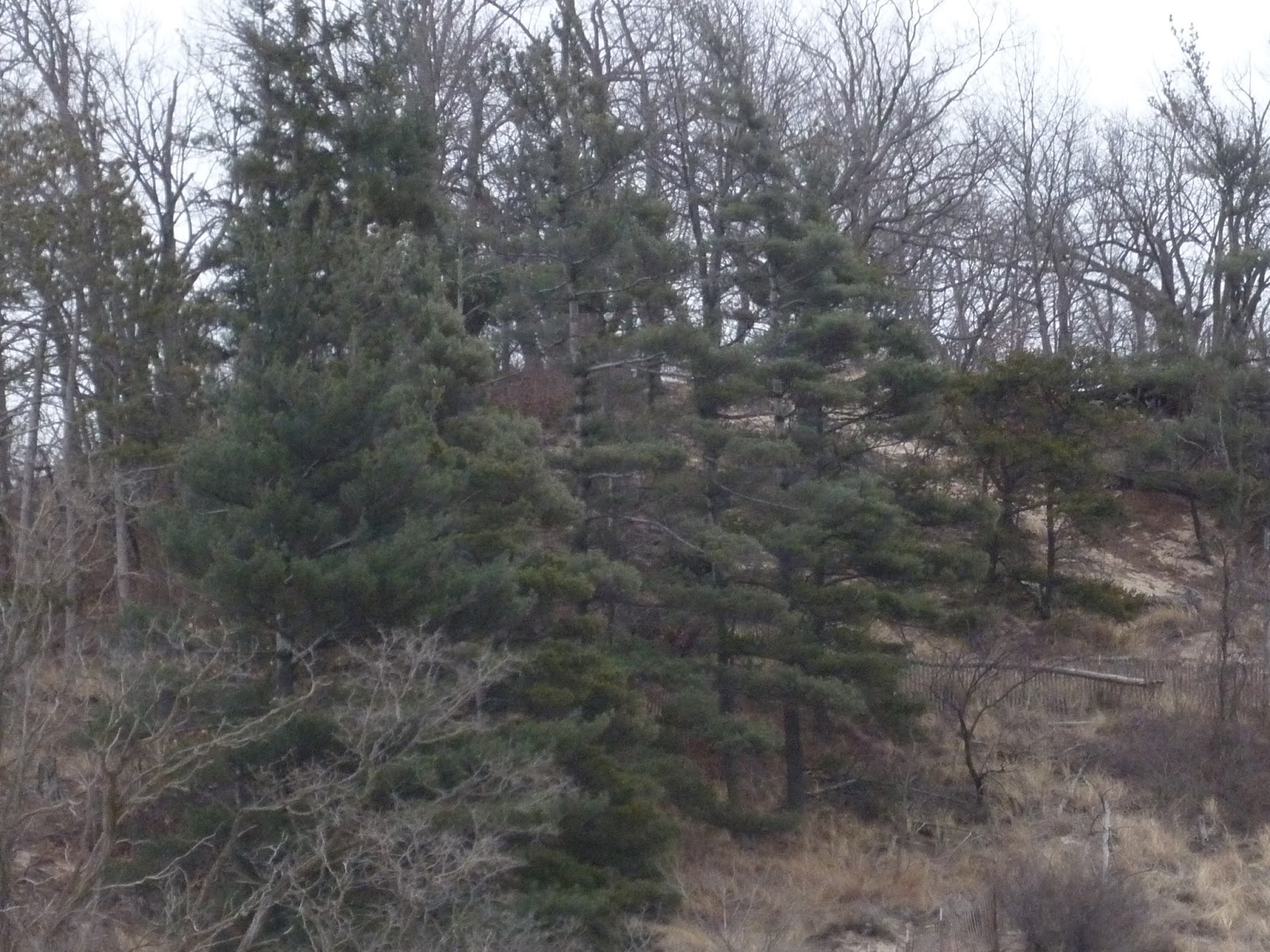
Both shots taken at Indiana Dunes State Park near the end of State Park rd.


Now normally when one comes across such stands so far south it is because park agencies would have planted them to add exotic interest to the environment, an attempt to create something of a "north woods mystique" to state and local campgrounds.  Pines might have existed here naturally at one point, but most that are seen south of the Great Lakes are nostalgic reminders of a timer before the great lumber pillage of the nineteenth century.  Here, however, they remain as relics of the huge stands that once helped to build Chicago.  They rise from the sands in scenes expected hundreds of miles to the north in northern Michigan and Ontario.  Travel only a few miles south, over ancient moraines left at the edge of long vanished ice sheets, and the sand is left behind to be overtaken by rich prairie soils and more temperate forests.  This is, after all, Indiana, a place one would hardly expect the north to thrive in.

Yet thrive it does.


But the north here is not alone.  The dunes are first stabilized by dune grasses...


...and more southerly trees like Eastern Cottonwoods (Populus Deltoides) and Eastern Redcedar (Juniperus Virginiana).


Eventually they are joined by trees found in more mature forests as richer soils are built up in the ever changing world of our eastern plant succession forests.  In some lower places, water stands for a significant portion of the year, and we have moist forests of ash trees, Swamp Cottonwoods (Populus Heterophylla), and other water tolerant trees.


Eventually the lake gets far enough away that its power over the shifting sands declines along with the sand itself.  Departure from the drainage basin of Lake Michigan marks an ecological departure into the Midwest, where a new struggle of plant succession takes place, waged not between sand and plant but fire and plant.  A mosaic of prairie, savanna, and forest stretches in all directions but north from atop the Valparaiso Moraine.  Looking north instead shows us what we have just seen, a meeting of north, east, and west.  These days humans mimic this corridor along our highways 20, 94, and various railroads.  Come by tomorrow for a look at the human presence in Indiana's "southern shores".

Sunday, January 27, 2013

Northwest Indiana: A Little Different

Time and again I have disagreed with the majority opinion regarding how we ought to define the Midwest.  Much of Ohio and Michigan just do not qualify to be truly part of the Midwest, with a good chunk of Wisconsin and bits of Minnesota not quite making the cut either.  Geographically, climatically, botanically, politically, culturally, and in so many other ways, these places are a distinct region better named for the Lakes which they embrace, and for the northern lands which they form the southern edge of.  Just beside them, however, are places that take on a different character almost immediately.  One such place would be Indiana.

Indiana has what one would definitely come to expect from the Midwest, even as it shares a few features in common with the Lakes region and the American South.  In the northwestern corner are a variety of human and natural features which mark a very rapid transition into something Midwestern.

Just south of Hobart, Indiana.

While Ohio and Michigan have their fair share of farms and quite open rural country, Indiana is positively dominated by it.  Even before the second born of our continent changed her face into what we have these days, Indiana was the first place heading west where one would find open prairies, some large enough so that a treeline on the horizon was barely noticeable.  The result was that settlers took quite readily to open spaces with excellent soils, and the place became a state as quickly as 1816.  They and their descendants formed an agrarian minded populace that has since become associated with the "heartland", and everything from their accents to domestic architecture reflect this quite well.


That said, the state was (and is) something of a highway as much as a destination.  People came to Indiana on their way to something else as often as they broke ground, enough so that the place has been self-proclaimed as the "crossroads of America".  In the northwestern corner of the state, this is perhaps all the more true.  While most western migration routes followed the main rivers and more southerly wagon trails, a connection to the Great Lakes was important enough that Indiana demanded a little bit more of it from Michigan, a territory which would have claimed land as far south as Gary.  The connection to Lake Michigan is indeed very tenuous compared to the rest of transit networks in the state, a situation reflected in the relative  lack of a drainage basin emptying into big blue.  Mere miles is all the grand lake can fetch in some places, while the Mighty Mississippi steals the rest.  Mere miles, however, is enough to produce a part of the state just a little different enough to make it a very special place.  This is dune country, and this is more of what we will explore tomorrow.

Saturday, January 26, 2013

A Birthday Card for Michigan

Northwest Indiana can wait until tomorrow, especially considering the significance of today.  Michigan turns 176 years young today.  Accordingly, I present to all my readers a few key shots about what our great state is.  We might have once pined away for a little bit more of Ohio and Indiana, but when we finally ended up with our current boundaries we came across with a way better package.

Michigan today is all about industry and agriculture of all sorts, with cities and towns made up of peoples from every corner of the globe, but at a more primal and natural level we are one side of the coin which we make up with Ontario in a beautiful backdrop for some dramatic and powerful lakes.  We are a southern peninsula which is often mistaken for more of the typical flat expansive farmland of the true Midwest.  Call me blindly devoted, but we are a bit more than that down here:

Taken at the top of the dune at Pyramid Point in Sleeping Bear Dunes National Lakeshore.  

For that matter, we are an even more, yes, mountainous land of lake and borderline boreal forest in our northern peninsula:

Taken from the back porch of Epoufette Bayview Inn in Naubinway, Michigan.

And yes, we are a land of steel and furnace, and our two portions are connected by a great symbol of our industry:

Just outside of the toll plaza looking south from one shore to another.

This bridge, our "Mighty Mac", crosses our intensely lovely waters which can more than hold a candle to the most postcard perfect oceanic treasures of the Caribbean:

A little bit more of Sleeping Bear Dunes National Lakeshore, this time at Glen Haven.

We are not only a land of shore, however, and have amazing forests:

In the spring brush at Island Lake State Recreation Area.  Here we have a very mixed forests of everything from oaks to maples along with our state tree and dominant forest feature, especially historically, the Eastern White Pine (Pinus Strobus).

And savannas and even prairies:

Also from Island Lake, a picture perfect remnant of the grasslands which once hypnotically attracted settlers.

From top to bottom.  Finally, in our present age, the age of Mighty Mac and a few centuries prior, we are a land of many cultures and a passageway of exploration, commerce, and both war and peace.  While we share a border by land and lake with five other states (Illinois and Minnesota across the waves), we share a history with a neighboring country, and especially a neighboring province, that we have much in common with.  As I claimed, we are one side of a coin that could also be likened to one part of a sandwich that hugs Lake Huron.  I believe our future definitely lies in rediscovering this relationship.

From the southern tip of Belle Isle.  Seriously people, go explore this gem of a park!

Happy Birthday, Michigan!  Some say you are pure, some say you are messy, but you are home to nearly 10 million of us humans and quite a lot of deer, as well as this proud Michontarian.

Friday, January 25, 2013

Lake Michigan From the Bottom

Really from the bottom, in Indiana, and at a low angle just over this lovely little sand dune.

The beach at Indiana Dunes State Park, an enclave of Indiana Dunes National Lakeshore.

The scale is a bit misleading, as the dunes are anything but flat.  The rest of the area is pretty pancake though, at least until you hit the Valparaiso Moraine.  Come by tomorrow for some more detail!  The next few posts will feature the softer side of heavily industrialized northwestern Indiana.